
Obligatory ‘This Might All Change’ Warning
Legal challenges to the new eligibility rules are basically guaranteed at this point, because when has the NCAA ever made a major rule change without immediately getting sued?
For now, the situation remains fluid. The final eligibility decisions for NC State players will ultimately be made by the university’s compliance department (not by us over here playing detective). We’re simply trying to piece together where things stand to the best of our ability based on the information currently available.
The new NCAA Division I eligibility rules – the age-based “five-in-five” model – were unanimously approved by the Division I Cabinet on June 23, 2026. They take effect this fall for the 2026-27 season.For NC State women’s basketball, this change arrives at a critical time as head coach Wes Moore builds the roster around a mix of returning veterans and key portal additions.
What the New Rules Change
The old system (five years total to play four seasons of competition) is being replaced by a cleaner, age-based model:
- Athletes can compete in up to five seasons within a five-year eligibility window.
- The clock starts at the earlier of:
- Initial full-time college enrollment, or
- The beginning of the academic year following their 19th birthday.
- Most waivers, medical redshirts, and hardship extensions are eliminated. Only limited exceptions remain (religious missions, maternity leave, and active-duty military service).
The goal is to simplify eligibility, reduce transfer portal chaos, limit older players on rosters, and create more consistency across Division I.
How It Applies to NC State
The new rules are not retroactive for players who already exhausted their fourth season by spring 2026. However, because NC State has several players with eligibility remaining after the 2025-26 season (including both returning upperclassmen and incoming transfers), the Wolfpack can choose per player whether to apply the new age-based model or stick with the old rules, whichever benefits that individual most.
This flexibility gives NC State meaningful roster control for both the upcoming 2026-27 season and beyond.
Impact on NC State’s Key Players
Here’s how the rules affect the seniors listed on the 2026-27 roster:
| Player | Seasons by End of 2026-27 | Eligible for Extra Year in 2027-28 under New Model? |
|---|---|---|
| Qadence Samuels | 4 | Yes |
| Zoe Brooks | 4 | Yes |
| Maddie Cox | 4 | Yes |
| Khamil Pierre | 4 | Yes |
| Desiree Wooten | 4 | No (window ends after 2026-27) |
| Audrey Ericksen | 4 | Yes |
Key takeaways for NC State:
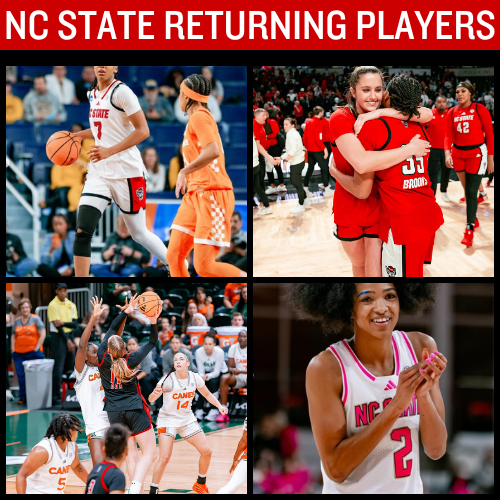
- Zoe Brooks, Maddie Cox, Qadence Samuels, Khamil Pierre, and Audrey Ericksen are all strong candidates to gain an extra year in 2027-28 if the school selects the new model for them. This could provide valuable veteran continuity.
- Desiree Wooten (transferring in from Colorado) is expected to be a one-year addition. Her clock started in fall 2022, so her five-year window closes after the 2026-27 season — even with her redshirt year not counting as a competition season.
- NC State has until July 31, 2026 to submit any remaining hardship waivers or extensions under the old rules.
Bottom Line for the Wolfpack
The new rules give NC State more flexibility than the old system for its current roster while making future roster planning more predictable. For the 2026-27 season, the team can compete normally while strategically deciding which players benefit from the new model heading into 2027-28.
This should help Wes Moore balance immediate competitiveness with longer-term roster stability as the program continues to compete in the ACC.
Exact confirmation for each player requires a formal review by the school’s compliance office and/or the NCAA Eligibility Center (factoring precise enrollment dates and any nuances). Birthdate and enrollment details can shift the exact window start by a year in edge cases, but the data available points to eligibility for the extra year across the board.


Leave a Reply